
> Auto Parts > Auto brake parts > Brake booster vacuum pump > 04B145208G Vacuum Pump for Audi A1 8X1 8XK 2014 - 2018
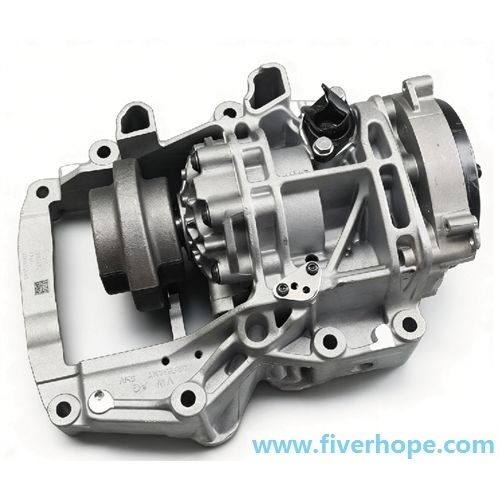

Part Name: Booster Vacuum PumpOEM Number: 04B145208GModels Applied:Audi A1 8X1, 8XK 1.4 TDI 11.2014 - 10.2018
Seat Ibiza IV Hatchback 6J5, 6P1 03.2008 - 12.2017
Seat Ibiza IV Sportcoupe 6J, 6P 07.2008 - 12.2018
Skoda Rapid Hatchback NH3 07.2012 - 03.2022
Skoda Rapid Spaceback NH1 07.2012 - 12.2019
Skoda Fabia III Hatchback NJ3 08.2014 - 06.2021
Volkswagen POLO V 6R1, 6C1 781 1.4 TDI 02.2014 - 10.2017
Volkswagen IBIZA IV 6J5, 6P1 143 1.4 TDI 05.2015 - 06.2017Condition: Brand new Aftermarket high quality partFeatures: Customized order is available , based on drawings/samples.
What is Vacuum Pump?
The brake booster vacuum pump provides the vacuum needed for the power brake booster to perform. If it fails or has a problem, the car will be left without assisted braking. Without the brake booster, the brake pedal will be stiff and will require more effort to stop the car. Vacuum boosters will probably be with us for a long time. It is the most efficient and economical way to amplify the force exerted by the driver. But where the booster gets its vacuum. Many auto parts providers have been using vacuum pumps to power the brake booster on their vehicles. For a vacuum brake booster to work, it needs a source of vacuum. In the past all that was needed was a port on the intake manifold. Now, vacuum pumps are the choice for negative pressure power.Why must be a Vacuum Pump?Vacuum pumps have been used on diesel engines for more than 40 years, typically as a diaphragm pump. These pumps were neither efficient nor reliable.Most modern European cars use either an electric vacuum pump or a pump driven by a sprocke.In every piston engine, vacuum is created during the intake stroke as the piston goes down in the cylinder and the intake valves are open. But modern engines have changed. Increased efficiency has reduced the amount of vacuum available to the brake booster. Engines have been downsized to 2.0- and even 1.4-liters. This means that there is less displacement to create the vacuum. Variable valve timing has further diminished the vacuum generated because the timing of the opening might be timed to allow a scavenging effect so some of the intake air makes it past the exhaust valve. This air is intended for the catalyst so unburned hydrocarbons can be burned. Turbocharging has also eliminated traditional vacuum in the intake manifold. The turbocharger produces positive pressure or boost in the intake manifold. The only time an engine might be under vacuum is when the engine is decelerating, and the throttle is closed.FIVER's Advantages on Vacuum Pump:◆ As OE supplier, we practice with very strict quality control, follow the TS16949 strictly.◆ With 3 years long term quality warranty.◆ Custom design, new developing based on customer request is available.
 |
© 2005-2026 FIVER POWER BRAKE PARTS Copyright, All Rights Reserved. new products Yubei District, Chongqing , China |